
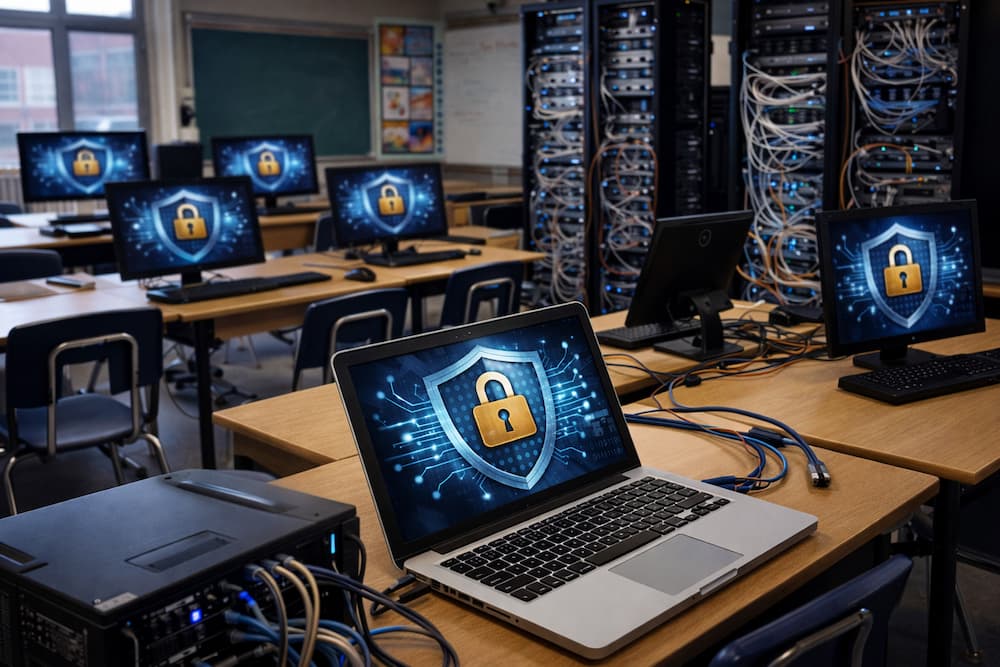
Cybersecurity for schools has become a critical responsibility for K-12 education organizations. Schools manage highly sensitive information, including student records, staff data, and operational systems that must remain available every day. As cyber threats continue to increase, schools are facing growing pressure to protect data, maintain compliance, and prevent incidents that disrupt learning.
For schools across Reno, NV and Northern Nevada, cybersecurity is no longer a background concern. It is a core operational requirement tied directly to student safety, trust, and continuity.
Student data protection is not just an IT concern. It is an operational responsibility that helps schools maintain trust, continuity, and compliance.
Why Cybersecurity for Schools Requires Special Attention
Cybersecurity for K-12 schools presents unique challenges. Schools operate open environments with large numbers of users, shared devices, and limited internal IT resources. Students, staff, and administrators all access systems daily, often from multiple locations and devices.
These factors make schools attractive targets for cybercriminals. A single compromised account or unsecured system can expose sensitive information or lead to a broader security incident. Effective cybersecurity for schools must balance accessibility with protection while remaining manageable within tight budgets.
Student Data Protection and School Responsibilities
Student data protection is one of the most important aspects of school cybersecurity. Schools are responsible for safeguarding personal information such as academic records, health data, and identifying details.
Protecting student records is not only a technical issue but also a compliance obligation. FERPA cybersecurity compliance requires schools to implement reasonable safeguards to prevent unauthorized access or disclosure of student information.
Education data security programs should focus on controlling access, monitoring systems, and ensuring data is stored and transmitted securely. When student data protection is treated as an ongoing process rather than a one-time project, schools reduce their exposure to long-term risk.
How School Data Breaches Occur
A school data breach rarely happens without warning. In many cases, data exposure begins with credential theft or phishing attacks in schools. Attackers often target staff email accounts or shared systems to gain access quietly.
Once inside, they may move laterally through networks, access records, or deploy ransomware. Because schools often lack continuous monitoring, these threats can go undetected for long periods.
Preventing a school data breach requires visibility into systems and user activity. Schools that rely solely on basic security tools may miss early warning signs until damage has already occurred.
Most school data breaches start with compromised credentials or a successful phishing email. Early detection and quick response often prevent larger damage.
Ransomware and Phishing Threats Facing Schools
Ransomware protection for schools has become a top priority as attacks against education organizations continue to rise. Ransomware can lock critical systems, disrupt instruction, and force schools into difficult decisions.
Phishing attacks in schools remain one of the most common entry points for ransomware. Emails that appear legitimate may trick staff into clicking links or sharing credentials. Once compromised, attackers can escalate quickly.
Cybersecurity for schools must include protections that detect suspicious behavior, limit access, and prevent attackers from spreading across systems.
The Role of School Cybersecurity Services
School cybersecurity services provide schools with structured protection rather than reactive fixes. Instead of responding only after an incident, cybersecurity services focus on prevention, monitoring, and response planning.
Managed cybersecurity for schools helps ensure systems are continuously observed for unusual activity. Alerts allow schools to act quickly when threats appear, reducing the likelihood of a full-scale breach.
Cybersecurity services for schools also support compliance efforts by documenting controls, monitoring access, and maintaining secure configurations across systems.
Network Security for Schools
Network security for schools plays a key role in protecting both instructional and administrative systems. Networks connect classrooms, offices, and cloud services, making them a primary target for attackers.
Effective education data security includes segmenting networks, monitoring traffic, and restricting access where appropriate. These measures help limit the impact of a compromised device or account.
Strong network security reduces the risk that a single incident will disrupt multiple classrooms or systems simultaneously.
Managing Cybersecurity With Limited Resources
Many schools do not have dedicated cybersecurity staff. Internal IT teams often focus on daily support needs, leaving little time for security planning or monitoring.
Managed cybersecurity for schools provides access to expertise without increasing staffing burdens. Outsourced cybersecurity allows schools to maintain strong protections while keeping costs predictable and manageable.
By working with a local cybersecurity provider for schools, administrators gain support tailored to education environments rather than generic solutions designed for large enterprises.
Why Local Cybersecurity Support Matters
Schools operate on tight schedules and depend on reliable systems. When security issues arise, delays can affect instruction, testing, and administrative operations.
FixSierra serves Reno area charter and private schools as a local cybersecurity provider. Local support means faster response, clearer communication, and an understanding of the regional challenges schools face.
For Northern Nevada schools, working with a nearby partner ensures cybersecurity strategies align with both technical needs and operational realities.
Cybersecurity as an Ongoing Commitment
Cybersecurity for schools is not a one-time project. Threats evolve, systems change, and new risks emerge regularly. Schools that treat cybersecurity as an ongoing commitment are better positioned to protect data and maintain trust.
Regular monitoring, updates, and staff awareness all contribute to stronger security. When cybersecurity becomes part of daily operations, schools reduce the likelihood of disruptive incidents.
Building a Safer Learning Environment
Protecting student data and preventing school data breaches requires a thoughtful, proactive approach. Cybersecurity for schools supports not only compliance but also stability and confidence across the organization.
For schools in Reno, NV and across Northern Nevada, FixSierra provides cybersecurity services designed specifically for education environments. By partnering with a trusted local provider, schools can strengthen security, reduce risk, and maintain disruption-free learning environments.